
The Ombudsman upheld 13 of the 15 Hounslow Council complaints it investigated from April to August. Housing and homelessness made up six of them.
Hounslow Council failed to write a care and support plan for a disabled resident after it had assessed his needs, the Local Government and Social Care Ombudsman has found. It is the latest of 13 complaints against the council that the Ombudsman has upheld since April.
We searched every decision the Ombudsman has published on the London Borough of Hounslow dated between 13 April and 17 August 2026. There are 55. In 40 of them the Ombudsman closed the case without a full investigation. Of the 15 it did investigate, it upheld 13 and did not uphold two.
The Ombudsman does not say where in the borough any of the complainants live, and it names nobody.
The care case: what the Ombudsman found
The newest upheld decision, 25 008 284, is dated 9 August. The man, called Mr B in the decision, complained that the council did not assess his care needs until August 2025, despite requests going back to 2023.
The Ombudsman did not uphold all of that. It looked at each request in turn:
- August 2023: a support worker appears to have referred Mr B for an assessment, but the council has no record of it. Not keeping a record was fault.
- December 2023: the council asked for more information and Mr B’s consent. The information never arrived. No fault.
- October 2024: the council sent written information and agreed Mr B would get back in touch. He did not. No fault.
- March 2025: his community psychiatric nurse referred him again. The council triaged it in May and finished the assessment in August. The Ombudsman called that “avoidable delay”, and the council has accepted it.
The assessment found eligible needs, including with nutrition, keeping his home habitable and using services in the community. But the council then wrote no care and support plan, which the Care Act 2014 requires. Nor did it review whether the support it had suggested was working.
Mr B did not take up a referral to the charity Thames Reach, and he decided against employing a personal assistant because he considered his assessed contribution unaffordable. The Ombudsman said that a light-touch review six to eight weeks on would have picked this up. It also found that his social worker said she would contact him once a support worker was allocated, and did not.
The Ombudsman found no fault on his other complaints, which covered advocacy, a social worker’s manner on the phone, the Household Support Fund and reasonable adjustments.
The council has agreed to:
- apologise and pay Mr B £200, within four weeks of the decision
- review his needs and complete a care and support plan, within eight weeks
- carry out a full financial assessment, and consider waiving all or part of the charge if he cannot afford it
- remind staff that care and support plans must be completed
The other 12
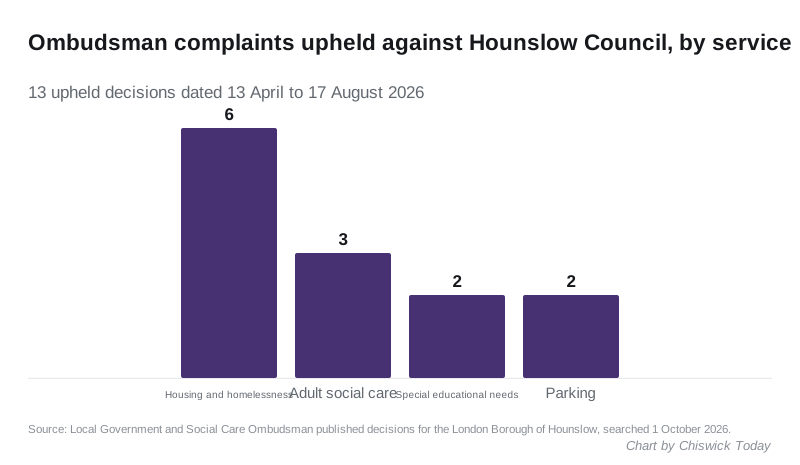
Housing and homelessness account for six of the 13. These are the upheld decisions, newest first, with what the council agreed to pay where the decision states it.
| Decision | Date | Service | What went wrong | Payment |
|---|---|---|---|---|
| 25 008 284 | 9 Aug | Adult care | No care and support plan after an assessment | £200 |
| 25 015 782 | 28 Jul | Adult care | Financial assessment too slow, so a family did not know the charge before care began | £250 |
| 25 010 158 | 21 Jul | Homelessness | Removed from the housing register without being told; no interim accommodation offered | £1,000 |
| 26 008 050 | 20 Jul | Parking | A driver paid £240 on a penalty notice where £160 was due | £80 refund |
| 25 011 499 | 21 Jun | SEND | Occupational therapy and speech and language therapy in a child’s plan not provided | £3,975 |
| 25 012 019 | 14 Jun | Housing | A tenant waited about 20 months for a promised deposit and rent refund | £300 |
| 25 007 112 | 27 May | Adult care | A resident overcharged for care, though he was later repaid more than the overcharge | Apology |
| 25 006 252 | 19 May | Homelessness | Council waited until the eviction to act and did not protect her belongings | £500 |
| 25 021 891 | 19 May | Parking | Enforcement agents called while action should have been paused; settled early | Penalty cancelled |
| 25 010 148 | 13 May | Homelessness | Delay starting homeless inquiries | £200 |
| 25 007 499 | 5 May | Allocations | Misleading information in the care leavers’ local offer | Offer to be reviewed |
| 25 005 537 | 27 Apr | Homelessness | Too slow to review whether temporary accommodation was suitable | £150 |
| 25 003 635 | 15 Apr | SEND | Misleading information led to a child changing school | £1,700 |
The April SEND case is a formal report rather than a decision statement. That means the council must consider it at full Council, Cabinet or a delegated committee of councillors, and tell the Ombudsman within three months what it has done. The £1,700 is two payments: £1,200 for the child’s lost provision from January to the end of July 2024, and £500 for the father’s distress.
Several of the decisions also commit the council to changes beyond the individual case. These include guidance for officers on when to offer interim accommodation, an action plan for spotting homelessness wherever someone first contacts the council, and correcting the care leavers’ local offer.
What it means for you
If you have a complaint about the council, the Ombudsman expects you to go through the council’s own complaints procedure first. Its service is free.
Three things from these decisions are worth knowing:
- There is a time limit. The Ombudsman normally only looks at matters you have known about for 12 months or less. It can make exceptions, as it did for Mr B.
- It cannot look at everything. Complaints about how the council manages its own social housing go to the Housing Ombudsman instead. A parking penalty is normally challenged through the formal representations and appeal process, not the Ombudsman.
- Keep your own records. In Mr B’s case, his evidence of a 2023 referral counted even though the council had no record of it.
If you are waiting for a care assessment, ask for a care and support plan once it is done. The Care Act requires one, and it must set out your personal budget and what you will pay.
For the council’s other services, see our pages on Chiswick bin collection days and council tax bands.
Have your say